

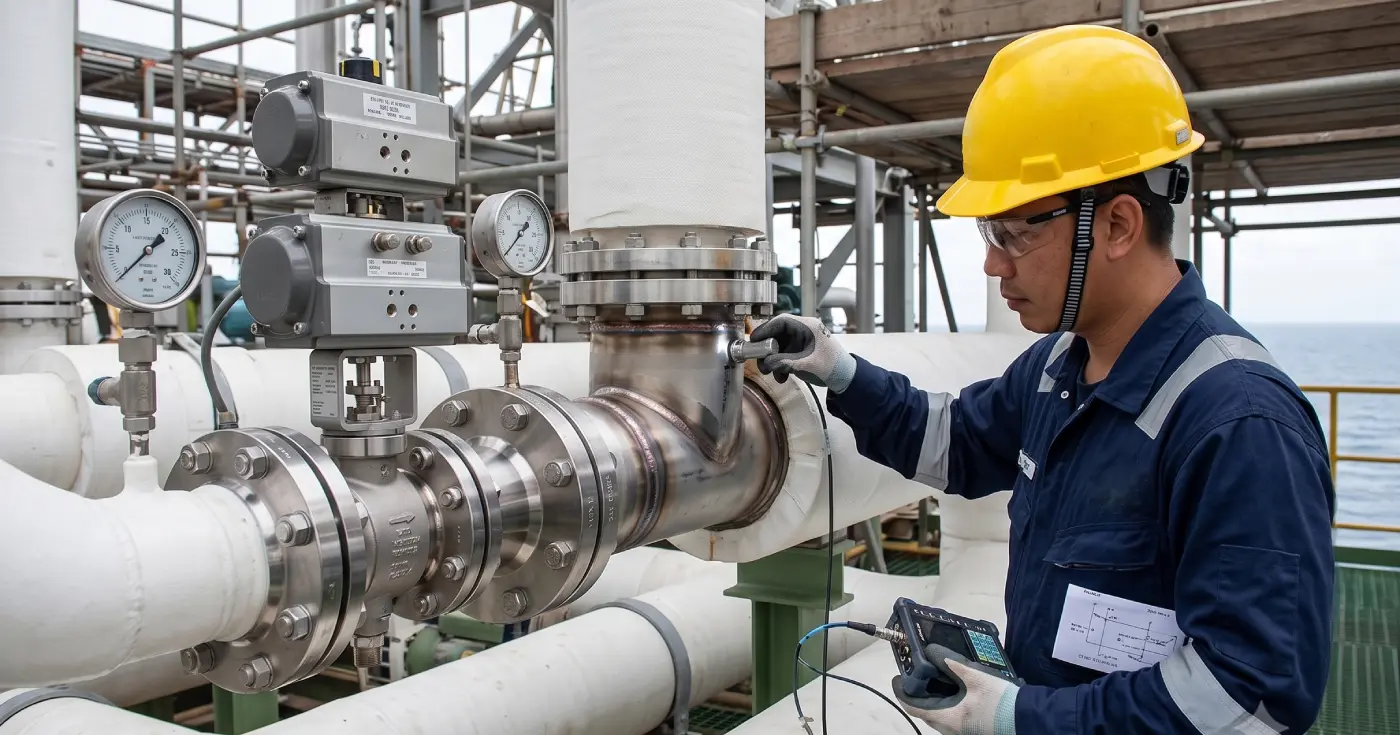
Preventive maintenance of piping systems is critical to guarantee structural integrity, operational efficiency, and safety in industrial maritime environments.
What are piping systems?
Piping systems are complex networks of conduits, valves, fittings, and control devices designed to transport fluids, gases, or energy through a vessel or industrial facility. These systems constitute the arteries of maritime infrastructure, allowing everything from fuel and water supply to hydraulic processes and fire suppression systems, always demanding absolute precision in their design and construction to withstand pressures and highly corrosive environments.
Industrial piping and efficiency
The optimization of fluid transport networks is fundamental for the performance of any industrial plant. An efficient piping design reduces friction losses, minimizes the energy consumption of pumps, and ensures a constant flow, which is decisive for productivity in modern industrial processes that demand high availability and technical reliability.
Naval hydraulic systems
High-pressure fluid management requires robust components and a design that contemplates material fatigue from mechanical vibration. The engineering of these systems ensures that steering and maneuvering mechanisms respond instantaneously, being vital for navigation safety on commercial vessels and offshore support platforms.
Applied mechanical engineering
The engineering behind fluid conduction systems integrates strength calculations, selection of alloys resistant to galvanic corrosion, and certified installation methodologies. This technical rigor prevents dangerous leaks and ensures that the infrastructure withstands the dynamic stresses inherent to the movement of vessels during prolonged commercial voyages.
Naval network maintenance
Constant care of piping lines prevents premature degradation due to the action of the saline environment and internal scaling. Periodic inspections and controlled cleanings prolong the lifespan of metallic materials, avoiding costly corrective repairs that would force the interruption of logistical operations and economic activity in ports.
Safe industrial construction
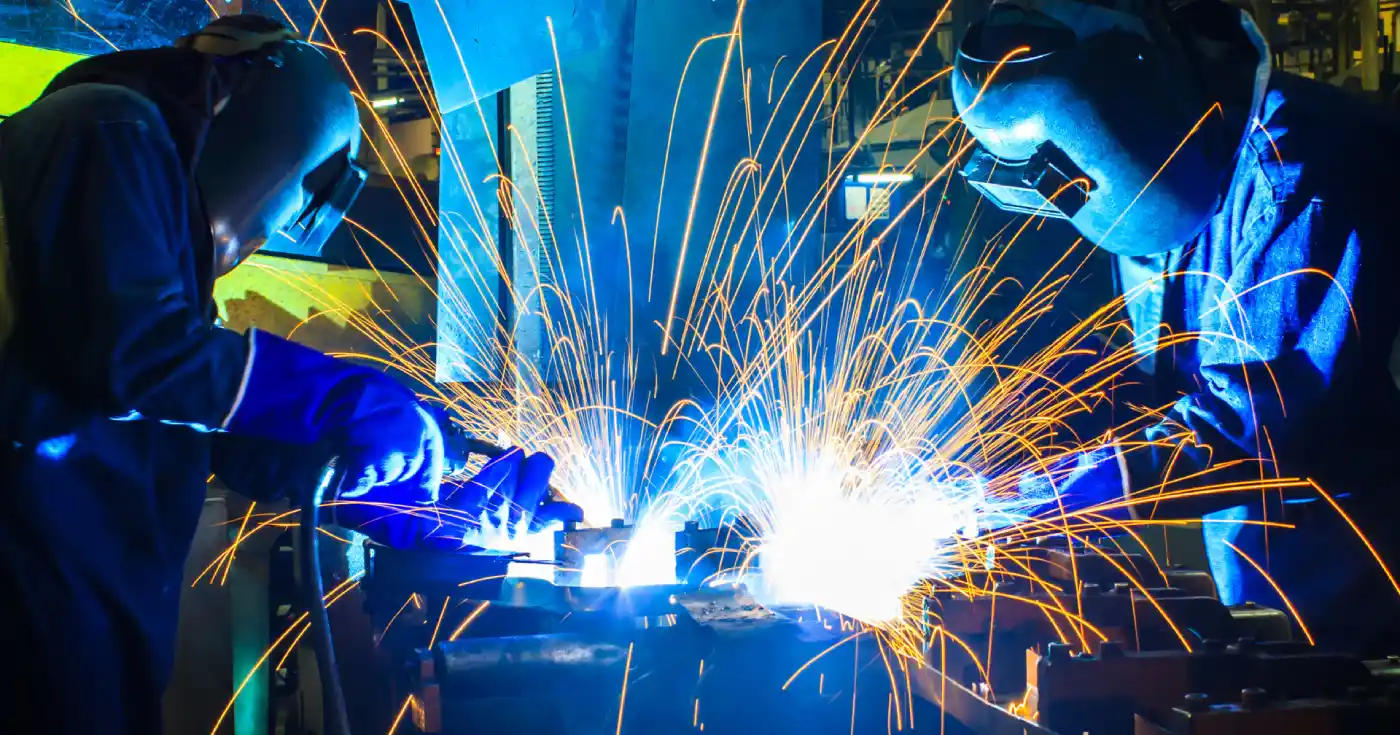
Each installation must comply with global welding and fastening standards to mitigate risks of leaks or structural failures. Modern industrial construction prioritizes the integrity of joints, employing specialized welding techniques that ensure the piping system remains leak-proof against operating temperature and pressure changes in any land-based or maritime plant.
Fluid industrial processes
The correct integration of fluid conduction systems is decisive for the operability of industrial processes. A logical design, which facilitates access for rapid repairs and constant monitoring, raises plant reliability, ensuring that port and naval operations remain within the safety standards demanded by regulatory authorities.
Reliable maritime infrastructure
The robustness of the infrastructure is a reflection of the quality in its design and execution. Piping systems installed under criteria of high technical demand allow port terminals and ships to operate without incidents, protecting both economic investment and the environmental environment by preventing spills through highly reliable containment and control systems.
Frequently Asked Questions
A piping system encompasses the complete network of pipes, valves, flanges, gaskets, supports, and accessories necessary for the transport of essential fluids. This includes fuel lines, potable water, seawater, fire suppression systems, hydraulic oil, and refrigerant gases. Each component must be carefully selected according to the pipe material, operating temperature, and design pressure. The correct integration of these elements is vital for the vessel's safety, allowing each system to function independently yet in coordination, avoiding risks of cross-contamination or structural failures in the hull.
TECNAVAL Industrial Solutions S.A.S. can resolve your needs through a comprehensive service that includes everything from detail engineering to the fabrication and installation of complex systems. Our team ensures that each piping network is designed to withstand the severe conditions of maritime operation, using certified materials that guarantee maximum durability. By trusting our experience, you obtain a piping system installed under world-class standards, where precision in every weld and the correct selection of accessories drastically minimize leakage risks and ensure efficient and safe technical operation.
The installation of naval piping is regulated by the rules of Classification Societies (such as ABS, DNV, Lloyd's Register), as well as international conventions such as SOLAS (International Convention for the Safety of Life at Sea) and MARPOL for pollution prevention. These regulations dictate minimum wall thicknesses, allowed alloy types, welding standards, hydrostatic test requirements, and criteria for fire protection. Following these regulations is indispensable to obtain the seaworthiness certificate and ensure that the ship complies with global maritime safety standards.
TECNAVAL Industrial Solutions S.A.S. can resolve any regulatory challenge, as our work methodology is strictly aligned with class rules and international engineering standards. Our technicians and engineers possess the knowledge to ensure that each installation complies with the most rigorous safety audits of the naval sector in Colombia. By choosing our advisory services and solutions, you obtain the peace of mind that your piping infrastructure is not only functional and durable, but also successfully passes the technical inspections of competent maritime authorities, avoiding unnecessary operational delays.
Materials are selected according to fluid aggressiveness and exterior environmental conditions. Carbon steels are used for standard applications, stainless steel for chemical and food corrosion resistance, and cupro-nickel for seawater lines due to its high erosion resistance. Reinforced polymers are also used in low-pressure systems. The key is to avoid galvanic corrosion by selecting compatible materials and properly protecting connections, as material failure carries serious risks of safety and environmental contamination in industrial and maritime environments.
TECNAVAL Industrial Solutions S.A.S. can resolve your material requirements by offering expert advice in selecting optimal alloys for each specific application. We have extensive experience in handling and welding special steels and materials resistant to marine environments, ensuring perfect metallurgical compatibility that maximizes the system's lifespan. Our material management ensures that you receive certified components, eliminating doubts about durability against environmental conditions and providing custom solutions for the most complex industrial challenges.
Preventive maintenance includes visual inspections to detect external corrosion, thickness measurements via ultrasound, verification of support status, and valve review to ensure proper sealing. Internal cleanings to remove scale, line flushing to ensure fluid purity, and pressure tests to verify the integrity of welds and flanges are also performed. A well-structured maintenance plan must document the condition of each pipe section, allowing prediction of when a segment will reach the end of its lifespan and must be proactively replaced.
TECNAVAL Industrial Solutions S.A.S. can resolve maintenance management with specialized programs designed to maximize the availability of your assets. We perform detailed diagnostics of your lines' condition, identifying critical points before they become costly failures. Our technical team employs state-of-the-art tools to ensure that each pipe repair and maintenance is executed under maximum quality standards. By entrusting your maintenance to our company, you ensure operational continuity and the peace of mind of having piping systems always in optimal safety conditions.
Before commissioning, it is mandatory to perform hydrostatic tests to verify tightness at pressures higher than operating pressure, ensuring no leaks exist in welds or flanges. Pneumatic tests in gas systems, purge tests, and line cleaning (flushing) to eliminate construction debris, and radiographic or ultrasonic examinations on welds to verify internal quality are also performed. These tests are the final quality control step to validate that the system has been manufactured according to engineering requirements and is safe for continuous operation.
TECNAVAL Industrial Solutions S.A.S. can resolve your validation requirements through certified test protocols that guarantee your system's integrity. We have the equipment and technical capacity to perform hydrostatic and tightness tests with high safety standards, documenting each process for your maintenance history. Our pre-operational intervention provides you with the certainty that the piping system is reliable and safe, fully complying with your project's technical expectations and the requirements demanded by regulatory authorities.
Failures are usually due to pitting corrosion, erosion wear at directional changes, fatigue from excessive vibrations that end up cracking welded joints, and water hammer generating destructive pressure peaks for valves and fittings. Likewise, inadequate thermal expansion can cause deformations that stress connections and supports. Identifying the root cause of these failures is vital, as they are often indicators of deficient original design or preventive maintenance that has failed to mitigate operating stress factors acting on the system.
TECNAVAL Industrial Solutions S.A.S. can resolve recurrent failures by applying an engineering approach that corrects the underlying problem, not just the surface symptom. We evaluate the causes of fatigue or corrosion and propose improvements such as support design optimization, replacement with more resistant alloys, or the implementation of water hammer dampeners. With our intervention, you minimize the incidence of technical issues, ensuring your piping system is reliable, significantly reducing frequent repair costs, and guaranteeing fluid operability throughout your infrastructure.
Correct design optimizes energy efficiency by minimizing head losses and improves operational safety by preventing leaks and catastrophic failures. Furthermore, it facilitates maintenance tasks by allowing easy access, improves the durability of connected equipment by providing a stable flow, and guarantees full compliance with environmental and safety regulations. A well-designed system is an investment that drastically reduces long-term operating expenses by decreasing the need for unforeseen corrective interventions and ensuring a prolonged lifespan for all installation components.
TECNAVAL Industrial Solutions S.A.S. can resolve your efficiency goals by designing piping systems that adjust perfectly to your operational needs. We use modeling and calculation tools to ensure distribution, materials, and supports are optimal for each application. By working with our company, you ensure a design that maximizes performance and minimizes operational risk. We turn your needs into efficient engineering solutions that guarantee a reliable, robust piping system prepared to operate under the most demanding conditions of the naval and industrial sector.
Reference sites:
Reliable piping systems
Guarantee the integrity and safety of your maritime operations. Entrust the design and maintenance of your piping systems to our certified experts for maximum industrial efficiency.